
Inspiring Curiosity Through Stories and Illustrations
Key Takeaways
- Stories combined with illustrations can effectively stimulate children’s curiosity.
- Interactive environments enhance learning by encouraging question-asking behaviors.
- Real-life examples demonstrate the power of curiosity-driven learning.
Table of Contents
- The Power of Storytelling
- The Role of Illustrations
- Interactive Learning Environments
- Real-Life Examples
- Practical Tips for Educators and Parents
- Conclusion
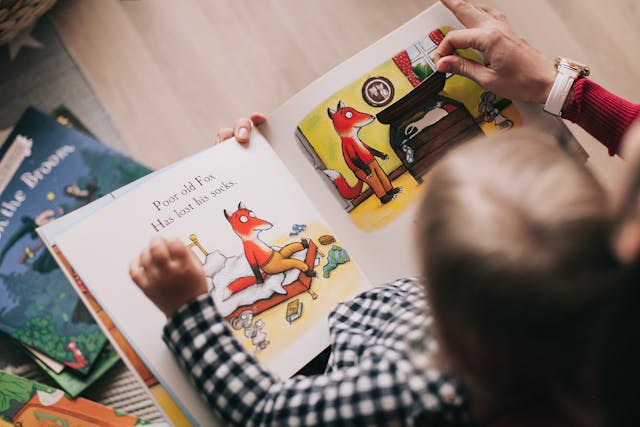
Curiosity is the foundation of discovery. It fuels learning not only in childhood but also throughout life. Thoughtfully combined stories and illustrations can encourage children to ask questions and eagerly engage with new topics. Innovative educators and creators are using tools like the writing and illustration method to construct rich, immersive experiences for young readers.
When children are presented with stories that appeal to their imagination and are supported with captivating visuals, they are naturally drawn to explore. The combination transforms abstract subjects into tangible, understandable concepts. This engagement is crucial for fostering enduring curiosity and problem-solving abilities.
Illustrations are more than decorative elements. They serve to clarify, reinforce, and sometimes expand on the narrative, making learning accessible to all kinds of learners. Including art from diverse cultures and traditions also broadens children’s perspectives, helping them see themselves reflected in the material and encouraging empathy toward others.
As the educational landscape evolves, creating environments where learners can discuss, experiment, and question has never been more important. Such environments transform passive information consumption into active, hands-on discovery. This shift is at the heart of modern pedagogy, as highlighted by leading education experts worldwide.
The Power of Storytelling
Storytelling is a long-standing tradition that remains a powerful teaching tool. Stories make information relatable and memorable. Engaging tales can turn abstract or intimidating subjects into compelling journeys with characters, conflicts, and resolutions. Story-driven teaching helps children understand new information and encourages them to see connections between ideas. Additionally, storytelling helps develop language and communication skills, as children practice sequencing, descriptive language, and emotional expression when recounting stories. These skills are crucial for lifelong learning across all subjects. Stories also provide safe spaces for children to explore complex feelings and societal issues in an age-appropriate way. Creating their own stories fosters imagination and originality, which is key to creative thinking later. Research shows that narrative techniques help children understand unfamiliar experiences and adapt to change, such as moving, facing challenges, or working in teams, fostering resilience and adaptability. By seeing problems through the eyes of story characters, children learn empathy and appreciate diverse problem-solving approaches.
The Role of Illustrations
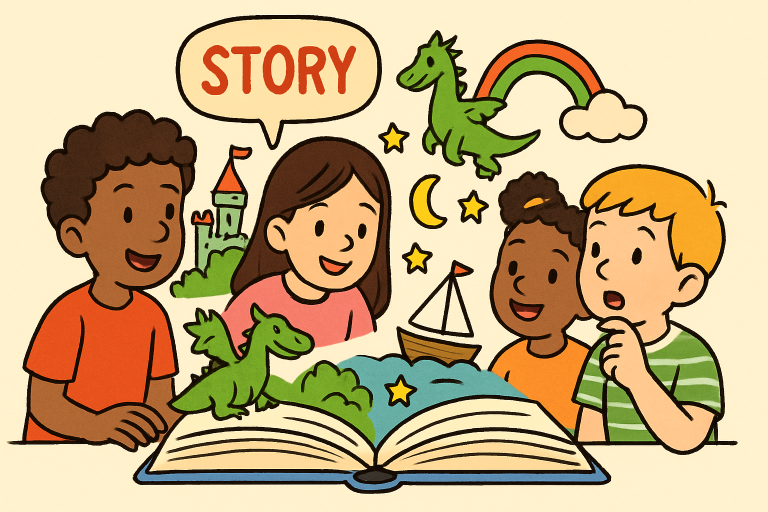
Illustrations complement text by engaging senses and aiding learning. For young or emerging readers, visual cues provide context to decode meaning. They are especially effective for illustrating scientific processes, sequences, or perspectives, enhancing understanding and retention, and encouraging exploration. High-quality images inspire questions like ‘What is happening here?’ or ‘How does that work?’, fostering deeper inquiry. They also bridge language barriers using universal symbols, helping learners of different abilities participate and share in discovery.
Interactive Learning Environments
Beyond books, children benefit from learning spaces that encourage curiosity. Interactive environments—classrooms, libraries, museums, digital platforms—offer chances to engage actively. A pilot study shows that spaces that foster curiosity through metacognitive skills such as questioning and reflection boost engagement and understanding. Designed interactive areas often include tactile exhibits, maker zones, and collaborative projects, promoting experimentation and a growth mindset where mistakes are learning opportunities. Digital tools, such as animations and story apps, enhance this with immediate feedback and repeated exploration. Incorporating interactivity into daily routines—group storytelling, art displays, science kits—reinforces the value of questions and ideas, preparing children to embrace the unknown with enthusiasm.
Real-Life Examples
Many educators and publishers are already seeing tremendous results by combining stories and illustrations. Curious Minds Explorers Publishing has pioneered the use of engaging science narratives enhanced with colorful art and hands-on activities. Their book, “The Science Scoop: Busting Myths About Science,” invites children to look beyond common misconceptions through accessible storytelling. This model demonstrates how curiosity-driven learning can be made vibrant and fun, as highlighted by respected teaching resources such as 21K School.
Other initiatives include libraries hosting “story walks,” where entire picture books are displayed page by page along outdoor trails, encouraging children to move, read, and engage with nature at the same time. In classrooms, teachers might co-create illustrated stories with students or use digital whiteboards for collaborative story mapping, further connecting visuals with narrative exploration. There are also online communities where young readers share their own illustrated tales, providing validation and inspiration for peers worldwide. These innovative practices prove that, regardless of setting, combining story and art can unleash every child’s inner explorer.
Practical Tips for Educators and Parents
To promote appreciation of diversity and critical thinking in children, it is essential to choose stories from various cultures and perspectives. After sharing these stories, encouraging open-ended questioning, such as “What if?” or “Why do you think that happened?” helps stimulate critical thinking and self-expression. Hands-on activities, like crafts or science experiments, reinforce lessons and provide creative outlets. Additionally, utilizing interactive e-books and educational applications enhances storytelling with dynamic illustrations, catering to different learning styles. Creating story-based challenges, such as developing alternative endings or drawing story maps, fosters analytic skills and creativity. Finally, modeling curiosity by asking questions and seeking answers together establishes a supportive culture of exploration and wonder.
Conclusion
Blending crafted stories with illustrations awakens children’s curiosity, transforming learning into an enjoyable journey that develops skills and inquiry habits. Creating discovery opportunities, embracing diversity, and fostering dialogue inspire lifelong learners. Curiosity helps children adapt, think critically, and innovate. Using stories and visual exploration lays the foundation for confident, creative individuals. In classrooms, homes, and communities, stories and art continue to inspire discovery, passion for learning, and a better future.